
Indo has been influenced by the diets and ancient medical systems of 4 different cultures – Indian, European, Arab and Chinese. They each support – to varying degrees – the theory that proper nutrition is the key to good health. Food, medicine and power of the mind have long bean seen as a single entity.

[private]I’m currently in Ubud, Bail doing my annual 10-day juice fast and cleanse. When I first visited Bali in 1993/4 I was 25 and in need of a break. I still don’t know why I chose Bali, as in those days not many people travelled here, and I certainly knew nothing about Indonesia – not even the currency upon landing. I went alone, without thinking about it too much. I landed in Denpasar with my backpack and hiking boots, a passport, a few clothes, toiletries and a cosi. I left from Bangkok around 6 months later a different girl. My world had been opened up to herbal medicine and learning how to use food as medicine.
During my travels in Bali, I remember locals telling me once you’ve come to Bali you’ll always return – it’s gets under your skin. How right they were. That first trip was life changing for me.
I was always a deep thinker searching for the meaning of life; reading works from different philosophers and healers; devouring spiritual and religious text and anything I could get my hands on regarding food, personality, emotions and human behavior. On this particular trip to Asia, my first of many, I was introduced to Asian herbal medicine and spiritual healing. I was hooked!
I started on a lifetime’s journey of looking deeper into the relationship between the body, health and emotions. I had an inkling that many, if not most of my health issues were stress related, but now I had back-up.
I read lots of books on that trip, and asked the locals lots of questions. Just watching the way they cooked opened up a fabulously exciting, new world to me. New spices, ingredients, techniques, medicinal qualities – my love affair with all things Asian had begun.
I couldn’t get enough of learning about food as medicine. I had already tried many different diets and Western healing methods in an attempt to heal (or even get some relief from) the endometriosis and gut problems that had stayed with me, but nothing really helped for very long.
Upon my return home I started growing all sorts of different medicinal herbs and began using them to make teas, cosmetics and poultices. I read different herbal medicine books by inspiring, female herbalists like Dorothy Hall and devoured classics like Jethro Kloss’ ‘Back To Eden’. I realized also at this time that the witches who were burned at the stake and drowned during the witch -hunts were more than likely herbalists and other healers, like me.
Life in Indonesia is steeped in superstition and the locals know that herbs alone cannot always cure. Sometimes prayer and ritual are the answer, and in cases of a persistent illness, people often turn to magic. Jamu healers use a combination of medicine, prayer, massage and magic. The Healer matches the vibrations of his or her mind with those of the patient. He/she is then literally on the same wavelength as the patient, and Indonesians believe they can send vibrations or read the patient’s thoughts. The crucial spot for the Healer is the third eye at the centre of the forehead.
Being ill in the spiritual sense is an ailment for which the average Westerner would not take medicine, but according to both Javanese and Balinese understanding of ‘health’ there are many different cures, just as there are many different causes. Indonesian’s believe that some of the older jamu recipes were received while in a trance, or though a dream.
Jamu not only relies on herbal medicine, massage, prayer and magic, but also encompasses pills, powders, ointment, lotions and ancient folklore. Don’t feel bad if you’ve never heard of Jamu – it’s been a closely guarded secret until very recently. Asians traditionally don’t share information, especially with Westerners.
The Healer’s in Indo’ come from all walks of life and have extraordinary skills; some are born with this gift, others develop it throughout their life. Generally they rely on a sense of touch, personal experience and lots of herbs and spices. The fee is often left up to the patient, and it can take as long as 30 years to become a competent healer.
The all-powerful instrument is the mind, and because it controls the body, healers believe that many illnesses are created by mental imbalance alone. The healer passes positive thoughts onto her patient thus aiding the healing process. Trances, meditation and mysticism – which forms an important part of healing in Indo’ – are awe inspiring, impressive and even a little bit scary at times.
Jamu originated in Java, and as the story goes following the adoption of Islam in the late 15th century, many fled to Bali, taking their books, culture and customs with them.
Because of their religious content palm manuscripts (healing knowledge was inscribed on the dried fronds of a type of palm tree) are considered sacred and only handed down to a chosen few.
President director of Jamu Manufacturer ‘Mustika Ratu’, and chairman of the ‘Indonesian Jamu and Traditional Medicine Association’ says According to ecological concepts nature is meant to prolong life, and life depends on how people use their senses and instincts. Instinct teaches us that if there is darkness, there must be light. If there is disease there must be a cure; if there is poison there must be an antidote.‘
In Jamu, all concoctions are simple, practical, exotic and rarely expensive. The plants used for medical purposes in Indonesia date back to prehistoric times. Tools such as mortar’s or rubbing stones were used to grind plants to obtain powders and plant extracts.
It’s about inner and outer beauty and improved health with an holistic approach.
Over the years in times when modern drugs were scarce, many have returned to their parents and grandparents tried and tested remedies – the industry has always returned, and even stronger, following each setback. These setbacks could be caused by competition from imported drugs, political reasons, funding for research or simply that the younger generation are rebelling and want to Westernize. Many islanders are now returning to the traditional ways as they’ve deciding that the synthetic ingredients used in modern drugs often make them feel worse instead of better.
There are doctors in Indonesia who believe in and recognize the efficacy of traditional medicine and prescribe jamu without letting on to their patients. Some modern- thinking patients might lose faith in their doctor otherwise. The pills they have made up for their patients are made by prescription at the local pharmacy – and usually include the most popular jamu ingredients turmeric and ginger.
The traditional method of street sellers carrying the jamu in baskets on their back is called Jamu Gendong.
Jamu is an holistic approach. The concept of harmony – balance between a person and their environment, or the balance between the hot and cold elements in the body – means that both the illness and medicines are separated into hot and cold categories. A skilled herbalist will dispense the correct medicine – be it hot/cold; sweet/sour; bitter/sugary; strong/weak. Also, if a formulae is developed to treat a specific problem in one organ, the effect on the rest of the system must always be taken into consideration. There are 3 categories in a single jamu – the main ingredients; the supporting ingredients and those added to improve the taste of the jamu. (Jamu usually has a strong bitter taste.)
Jamu is not an overnight remedy. Results will usually be achieved with regular use over a period of time. This is also the reason why patients don’t usually experience any side effects – it’s a slow process, unlike Westerns medicine. Some jamu are made from poisonous herbs, so need to be made up and administered with care or they can potentially be toxic. It’s the skill of the herbalist to know how to neutralize these poisonous elements in order to produce a powerful and curative medicine.
The method of treatment is very different from the conventional Western approach. In western medicine drugs usually act to kill and infection, while Jamu encourages the body to produce its own antibodies. Jamu acts as a catalyst and does not replace the body’s functions. The cure comes from within – Dutch Healer Father Lukma
There’s no doubt that jamu mixtures are full of active, natural antioxidants like Vitamins A, C and E, all of which we now know contribute to wellbeing. Many of the barks, leaves, roots, stems, seeds and minerals used in jamu come straight from the tropical rainforests in Indonesia where there is little or no pollution so are still at their purest and most potent.
A combination of belief, prayer, ritual, magic and herbal medicine is used to solve their health problems.
The skill has traditionally been handed down from mother to daughter. Brides were ‘sent off’ with a magnificently decorated square or pyramid shaped box filled with stacks of small drawers full of medicinal herbs. What a lovely gift! And this practice was not just reserved for the rich or well educated.
Whether a woman’s recipes are passed down through the family or come from books, there is a degree of artistic license in all the formulae and the measurements. Some use the number of ons (= to 100g) or fingers, a thumb or handful, and others use by price. For example ‘Rp 200 for betel leaf, Rp 100 for sugar etc, but this is tricky as prices obviously vary over time. (‘Rp’ stands for the Indonesian money currency rupiah.)
Despite usually having given birth to large families and more often than not enduring hard work with long hours, Javanese women remain in good condition. After giving birth Indonesian mothers (still) take a course of jamu for 40 days to cleanse the body, undertake after-birth massage and (torso) binding. All of this helps to contract the muscles (including the uterus), lose weight and get herself ‘desirable’ once again. Six week later she’s back in pre-pregnancy shape. Oh, and no sex for 40 days. (Apparently this is not so easy for the blokes. Try ‘binding’ your torso for a month boys, whilst fasting and cleaning out your uterus by sitting over smoking herbs – just after giving birth and tending to a new baby. Sorry, the feminist in me had to say something,)
Jamu also features in Javanese wedding ceremonies – the bride’s Mum presents the newly weds with a box or botekan containing various seeds, rhizomes and dried cuttings from traditional medical plants and spices. These are to be used on the first day of marriage and most importantly, be planted in the garden of the couples new home.
In the palace things have traditionally been a bit more full on. Prior to a wedding the bride- to- be goes into lock down for a month. They have a daily Mandi Lulur – a massage that uses rice husks, white turmeric and a fragrance to scrub the skin until silky soft. (I’ve just had a week of this, and yes it does leave your skin feeling like silk). They do a kind of fast, eating very little – only steamed veggies and small amounts of protein, and prepare their vagina’s, meditate and generally get ready to be a at their most beautiful for their husband on their wedding day. The average Indonesian these days will typically undergo this type of pre- wedding prep’ for 1-3 days. Yes Indonesians are just as preoccupied with youth and beauty as we are in the West. Perhaps more so, considering the emphasis on one’s yoni. (yoni, literally ‘vagina’ or ‘womb’) is the symbol of the Goddess (Shakti or Devi), the Hindu Divine Mother.)
For the blokes, jamu is all about it’s potential as an aphrodisiac. A man needs to be virile with a mojo to challenge Austin Powers. There is a somewhat dubious jamu available from street sellers available for ‘men only’. (I can imagine why.) It is apparently very strong and gets one quite drunk, so it’s easy to spot these types of sellers as they’re loud, (and horny I imagine.) The male street seller or Jamu Gendong doesn’t usually sell medicine for or to women. This is apparently to avoid embarrassment.
During a colonic this week, I was asking the two women who perform this (no so fun) task about other jamu recipes that Balinese women regularly use. They brew betel leaves into a tea then drink it to help keep their menstrual cycles free of clots and pain. (Coconut palm sugar and tamarind warm water – also reduces clots and cramps.) They also wash their genitals with the cooled betel leaf tea after menstruation, as it’s a powerful anti-septic. On the topic of genitals, there’s and special package of herbs you can buy in Kuta (‘at special shop’) that you burn and then sit over. They have a special chair for this. This is to ‘keep your vagina nice, very good after menstruation, and for sex’. Most women in the west would be freaked out by this idea. I know this because of the reaction I get when I suggest a douche to my clients. ‘A what?’ I personally am loving the idea though. Why not? It reduces discharge and thrush, and anything else untoward. I had never realized there was such a strong focus on the vagina here in the East. Maybe we could take a leaf out of the Jamu book – a betel leaf in fact. There are many jamu recipes specifically designed to make the vagina ‘tight, dry and sweet smelling’. Yup!
Sugar is an important ingredient in many jamu recipes. (My lades in the colonic room reckon they have no palm sugar here Bali. I’m suspect on this though as 90% of palm oil production happens here in Indonesia, and that they use coconut palm sugar on the island instead.) I’m sure many jamu makers still use white sugar and rock sugar, as they’re much cheaper than coconut palm sugar. They also use a factory-made synthetic substance similar to saccharin – which is said to cause coughs, and many other things I’d imagine. Jamu gendong – herbal tonic street sellers are criticized for doing so, as this lessens the quality of the product.
The taste of the fresh jamu is usually very bitter, so is followed by some fruit like banana or papaya, by adding a pinch of salt to the glass, or followed by a slice of lemon or a little honey. These things are suggested as a way of reducing the ‘disgusting’ aftertaste. (A note to my clients and others who take liquid herbal medicine from a herbalist – if you think the herbs I give you are a bit of an assault on your taste buds, try some jamu and you’ll soon be swallowing mine with a smile on your face.)
How to take it. Indonesian folklore suggests standing up straight with your toes crossed, facing the sun – the sun is the symbol of light and divine power, representing the oneness of everything, so this makes sense. Practically, the sun warms the body, thereby relaxing muscles and helping the body’s systems to absorb the herbs more efficiently. Not such an ‘out there’ idea either.
Jamu uses up to 213 medicinal plants. A handful of species are the undisputed superstars of jamu and they belong to the ginger and turmeric family.
It (turmeric) also goes into jamu Asih Kinasih, the love potion that is said to bring a whole new meaning to the words love making.
Nutmeg one of Indo’s most famous tress, where it regarded more of a medicine than a spice. The mace – or lacey covering – can banish headaches, used as an aphrodisiac, a cure for diarrhea, or effective gargle. Carrying a nutmeg is said to be good for muscle pain and rheumatism.
Camphor. The precious liquid is used to stimulate heart and blood circulation, and Western medicine accepts it as a mild antiseptic and anaesthetic.
Ginger. There are around 200 species all up that are all different in shape, colour, flavor and colour and curing abilities. Many of these appear on the WHO’s (World Health Organisation) list of the most popular medicinal plants used in 23 countries. Most common is ginger officinale.
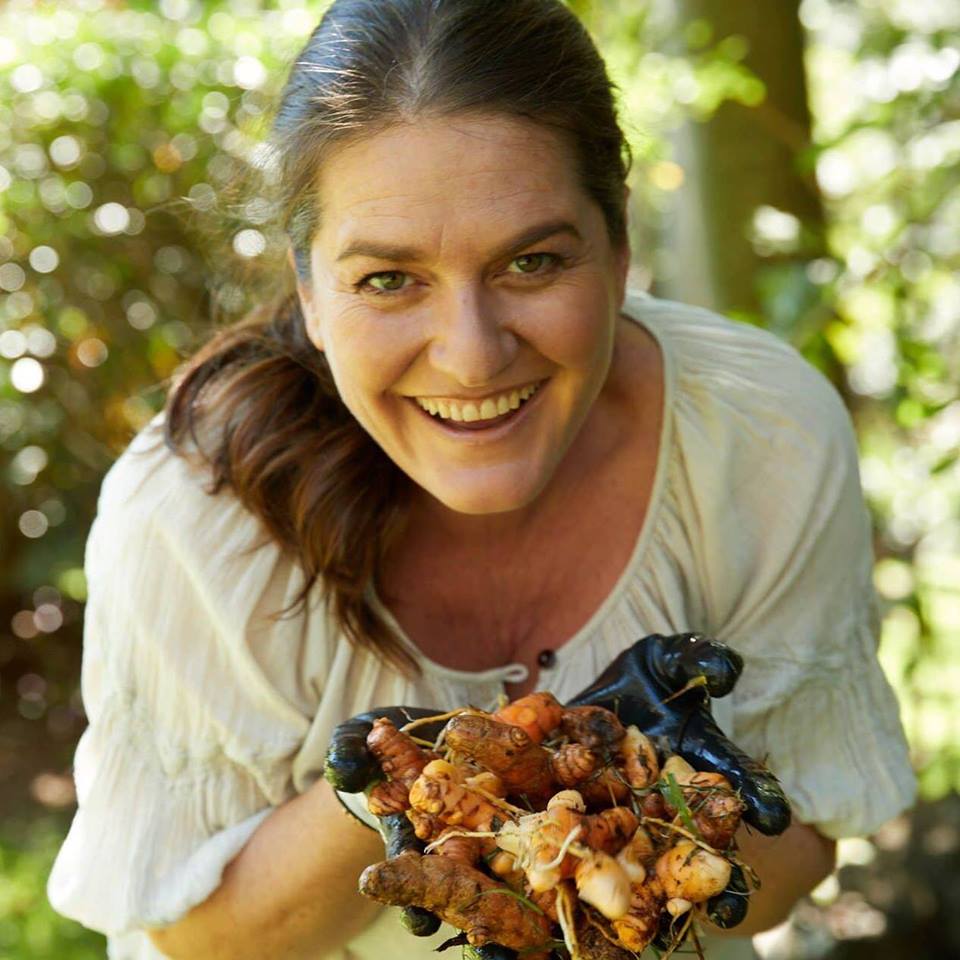
Turmeric (curcuma domestica) has added flavour to food for thousands of years. Turmeric is considered sacred in the East as it symbolizes the sun – the source of light, energy and growth. It’s widely believed that turmeric offers protection against evil spirits. Turmeric is found in practically every jamu formulae and cover everything from radiant skin, slimming, rejuvenation, post-natal, and a treatment for hair, to poultices and compresses that cleanse and deodorize. It also goes into jamu Asih Kinasih, the love potion that is said to bring a whole new meaning to the words love -making. Science has now proven that curcumin has anti-mutagenic properties and can help protect living cells from substances that cause cancer. It functions like an antioxidant. With or without this evidence Indonesian’s have always valued turmeric. This is obvious from the millions who swallow a glass of the turmeric rich drink jamu Kuni Asem daily. (You’ll find a recipe on my FB and web pages. Try Googling ‘Janella jamu’) It’s used as a disinfectant, antiseptic, for stomachache and diarrhea. It’s also anti-inflammatory, a painkiller, cleanses the blood and improves circulation, reduces bleeding, a wound healer, relieves itchiness, ulcers and abscess. As a vaporizer it’s used to treat asthma, angina, hypertension and fever. Its also good for cracked skin, post-natal problems, eczema, dysentery and arthritis. The darker the rhizome the better the quality; it needs to grow for a year before it can be used in medicine. In 1995, two Indian doctors were granted a patent on the healing effects of turmeric powder. This caused uproar in India where it’s regarded as common property. The doctors lost a major legal battle. This is what thrust turmeric into the Western limelight, then into our daily lives.

Galangal (laos). Marco Polo ells us that the Javanese grew and supplied galangal to the spice traders in the 13th century. Used in jamu to treat diarrhea, indigestion, stomachaches, diarrhea, and flatulence. It’s commonly used an aphrodisiac.
Resurrection Lily (kencur) – a warming remedy recommended for over 20 illnesses, including sea- sickness. It is used throughout Asia for its healing qualities. Kencur was part of the European healing arsenal during medieval times.
Red rice (unpolished rice) is the cheaper version of white ice. Its husk is rich in vitamin B1 and useful in treating upset and bloated stomachs. Roast in the oven then steep in boiling water to bring out its medicinal qualities.
Cashew – the sap is poisonous, and the nuts edible. Mixed with powdered lime, the leaves are made into a poultice for skin disease and burns. The roots are a laxative and the bark a gargle. The oily juice of the fruits skin is prescribed for warts and skin ulcers,
Papaya – it has strong digestive power thanks to an enzyme called papain. It can digest up 35 times its weight in meat. The boiled leaves clean the blood, improve the taste and flow of mother’s milk, and the roots are used for tumours in the uterus, to help control excessive bleeding and remove kidney stones. Papain relieves wind, flatulence, heartburn, bad breath, bloating, headaches, stomach and abdominal pain.
Tamarind – although the entire plant is poisonous, its medical use is widespread. The young leaves are applied topically for skin diseases, ulcers and rheumatism and are a good source of Vitamin B, while the pulp (not poisonous and used in cooking) is cooling, and a gentle laxative.
Kancun or Kangkung a green leaf water spinach loved by the Indonesians (and me) is as important as pasta is to the Italians. It flourishes in wet, humid conditions I have some growing at home, (and it doesn’t need to be grown in water). This liver-loving leafy green veggie is full of vitamins and minerals including folate, calcium, magnesium, fibre, iron and calcium. Leaf tips are used in salads but more often the whole kangkung is cooked and served as a side to main dishes and/or rice. It acts as a laxative and good treatment for piles, insomnia, headaches caused by nervousness, white vaginal discharge, gum problems and cold sweats. (I have a recipe in Janella’s Wholefood Kitchen.)
Spices including cinnamon, nutmeg, mace, cloves, fennel, black and white pepper, cardamom, coriander, cumin, caraway are often used, as are betel leaves, chilli, orange and pomegranate skins and 900 or so others herbs – basil, dried tamarind fruit and many more.
After cooking the family meal Javanese women still save rice water to use as a face or eye lotion.
These days many islanders – like Westerners – are deciding that the synthetic ingredients in modern drugs often make them feel worse instead of better, and the side effects often just don’t make using them worth it. It’s curious that industrialisation has led to an increased demand for traditional medicine.
Indonesians are undergoing extensive testing of jamu in an attempt to regulate the industry. Eight herbal medicine-testing centres were created in the early 1980’s to find out exactly what is going on with Jamu. It has now been accepted internationally. Between 1989 and 1993 jamu production rose by 159%, and sales were up by 63%, and it contains to grow. After all why not investigate an inexpensive system of medicine that solves many problems from curing arthritis and frigidity, hypertension and cancer, to improving fertility and regulating the appetite. Plus anything that helps a teenager adjust to puberty is worth investigating, on all levels isn’t it?
Of the 40,000 tropical plants in the world an estimated 30,000 grow in Indonesia, and 10% of all plant species are growing here also. At least 4,000 species grow in the forests of Kalimantan (in Borneo) alone. But logging, slash-and-burn farming practices and forest fires mean these treasures of the plant kingdom could soon be lost forever.
Many species are already being lost and at an alarming rate due to the reasons above as well as deforestation caused by massive palm plantations, other environmental pollutants and over-harvesting. And it’s almost impossible to find substitutes for many of the plants and trees used to make jamu. It’s essential we see their natural habitats designated as conservation areas and protected by government regulation, and to follow a selective picking system where people living in the vicinity are allowed to harvest these plants, and even then only allowed to pick shoots from the top of the plants, leaving the rest of it alone to encourage its recovery and regrowth.
The accusation that jamu is ‘not scientifically proven’ is still heard, and no, it’s not fully yet – at least not in the same (expensive and not always unbiased) way as Western medicine is, but results speak for themselves don’t they? Nearly 40% of all modern medicine is derived from plants, so you’d think the problem of potentially losing some of these species would be a concern for us all.
For now, I’m loving my time in Bali drinking fresh coconut water for breakfast with a side shot of jamu Kuni Asem, (turmeric and lemon juice) after my dawn trots through the rice paddy’s before my day begins. Now that’s what I call balance.

In love and jamu,
Janella[/private]


To enjoy a 15% Janella discount on your @TheHerbFarmskincare order, use this code JANELLA15 and watch your skin take a deep sigh of relief.

Antioxidants are a generic term that describes the mopping up of free radicals (the bad guys) in your body – by increasing oxygenation.
Modern food far from existing in its original state, the stress of living in today’s world, strenuous exercise, sun exposure, pollution, chemicals used to grow our food and make our cosmetics, computers, TV’s and carpets, smoking, and bacterial infections can all cause a rise in free radicals to dangerous levels. This results in damage at a cellular level resulting in premature ageing like wrinkles, bad skin, black rings under the eyes and sometimes, serious illnesses such as cancer.
Many antioxidants are vitamins like C and E, but Carotenoids are the most powerful anti oxidants known. Along with chlorophyll, carotenoids are what give plants their colour. The most powerful carotenoid is Astaxanthin (blue-green algae), and the next is Beta Carotene, of which Spirulina is the richest known natural source. There are other foods high in different antioxidants. This is where you’ll find lots of them –
Astaxanthin
This little known carotenoid is now believed to be the most powerful antioxidant by far. There are only two natural sources of natural astaxanthin—the micro-algae that produce it, and the sea creatures that consume the algae (such as salmon, shellfish, and krill). Astaxanthin is 65 times more powerful than vitamin C, 54 times more powerful than beta-carotene, 550 times more powerful than Vitamin E. No adverse reactions at all have been found for people taking Astaxanthin. It’s perfectly safe. You’ll find astaxanthin in supplement form on line.

You may have heard of astaxanthin before. The synthetic version made in a laboratory is commonly used worldwide to give farmed fish, especially salmon, its pinkish red colour. You really do want to avoid man-made astaxanthin as it’s made from petrochemicals, which makes it a toxic hormone disruptor.
Cacao
According to a study in the “Journal of Agricultural and Food Chemistry” published in 2003, researchers compared the antioxidant capacity of black tea, green tea, red wine and cocoa, concluding that cocoa has the highest antioxidant activity among the four products and the greatest potential for health benefits.
Garlic and its juice
Garlic is one of the best medicines in the world. It has natural ‘germanium’ and is anti-fungal and antibacterial (just to name a few of its actions). If you’re cooking your garlic, crush it up and let it sit for ten minutes before adding it to your recipe. It has to sit so that the enzymes can create the healing phyto-chemicals we need.
Dried Fruit
Goji berries have an enormous amount of antioxidants, yet dried Pomegranate seeds, (also expensive) have almost double the amount. And then comes dried Indian Gooseberries that have around 10 times more than Goji berries.
Green Super-Foods
Spirulina, chlorella and barley grass are chock full of minerals and enzymes. The enzymes are both anti-mycotoxin (mycotoxins are released by yeast/fungal infections) and antioxidants.
Matcha
This premium green tea powder from Japan is used for drinking as tea, or to use as a vibrant, green ingredient in recipes. Other green teas are grown throughout the world, but Matcha is unique to Japan. One cup of Matcha contains as much as 10 times the antioxidants of one cups of brewed green tea.
Quercetin
An antioxidant belonging to a class of water-soluble plant substances called flavonoids. Some research has shown quercetin-rich foods, such as apples, berries, red grapes, red onions, capers and black tea, are ‘natural antihistamines’ as they prevent histamine release. Quercetin is also available in supplement form.
Selenium
Sources include wheat germ, garlic, Brazil nuts, eggs and brown rice. Brazil nuts are perhaps the best source of this important mineral, and eating just 3-4 Brazil nuts per day may provide adequate intake for most people to maintain levels. Although, a supplement may be necessary if levels are low.
Vitamin A
Is found in dark green leafy veggies such as kale, rocket, baby spinach and all your Asian greens and any fruit or veg’ that is green, yellow, red or green in colour – so pumpkin, carrots, capsicum and broccoli, and spirulina has an enormous amount.
Vitamin C
This vitamin has long been known to battle the effects of ageing and disease. Like Vitamin E, Vitamin C is an effective antioxidant so it will help to reduce free radicals. Most fruits especially guava and paw paw are good sources of Vitamin C as are vegetables like kale, broccoli, cauliflower, tomato, Brussels’ sprouts and cucumber. Goji berries, Gubinge and Camu Camu have more Vitamin C per weight than most other foods on earth.
Vitamin D
Different from other vitamins because our bodies can make most of what we need with exposure to sunlight, unlike having to get it from our diet. In fact most foods aren’t great sources of vitamin D, and there are only a small amount to choose from. The best sources are cod liver oil, sardines, wild Alaskan salmon, mackerel and mushrooms. Sunlight is the best way to get your Vitamin D as it promotes this vitamin’s synthesis from cholesterol in the skin.10-15 minutes a day is enough, and allowing the sun to shine on as much of you body as you can is the way to go.
Vitamin E
Found in olives, nuts and seeds oils, wheat germ and leafy greens.
Zinc
Good sources are oysters, organic red meat, wheat germ, miso, pumpkin seeds, alfalfa, sardines, legumes, mushrooms, pecans, organic soybeans, sunflower seeds and whole grains.
Herbs + Spices
Extremely high in antioxidants, in fact at least 10 times higher than the foods above per weight, and the herbs and spices below are in a class of their own when it comes to antioxidants. Add these foods to your meals but you can also use them as essential oils and some of them as herbal tinctures. Look for 100 percent pure (therapeutic grade) oils, which are highest in antioxidants, and organic or at least wild-crafted herbal medicine. From the highest are cloves, cinnamon, rosemary, oregano, turmeric, cumin, parsley (dried), basil, ginger and thyme


Castor Oil – coming from the seeds (or beans) of the Ricinus communis plant, is an oil rich in antioxidants and Ricinoleic Acid (RA) and also contains small amounts of linoleic, oleic and stearic acid. The healthiest and safest version of castor oil comes from de-hulling the bean, then cold-pressing the seeds to produce the rich and viscous oil.

Castor oil packs have been used by healers to help reduce a variety of health conditions for many generations. Placed over your abdomen or liver, these packs are used to improve liver detoxification, breakdown kidney stones, reduce period pain, reduce symptoms of autoimmunity, support uterine and ovarian health, improve lymphatic circulation and reduce inflammation.
To DIY: Mix two to four drops of an essential oil – depending on what you’re treating – with enough warm castor oil to lightly soak a piece of cloth, (either a lightweight tea towel, or a piece of linen, or even a face washer). Castor oil has a rather strong smell, so be ready.
Btw, you can buy packs that include a piece of flannel cloth and a pack, with straps – so you’re all sorted. Just Google ‘castor oil packs’. (See images.)
Wring out the cloth to remove any excess oil, then place it over your abdomen or liver for at least 30 minutes, with a heat source like a wheat pack or hot water bottle over the top of it. This helps to stimulate lymph and liver function. Lie flat in bed, and perhaps cover your eyes with an eye pillow and use this time of quiet relaxation to go within.
Placing the pack on the right side of the abdomen or the whole abdomen will help support the liver and digestive systems, as well as reproductive and colon health. These packs are used also to relieve pain. Aim to do it 3 times a week, and relax.
Castor oil packs can be a bit messy, so I wrap mine in a plastic-free cover like a bees wax wrap, or an apron. Be aware of any skin sensitivities, so avoid applying the oils directly to your skin.

Side note – I was once at a sanitarium (health retreat/hospital) in Austria, and part of the program was a daily liver pack, such as this one above. Instead of the oil-soaked cloth though, they used flaked pieces of dried burdock root (a great liver herb) that had been warmed and stuffed in a plastic zip lock bag. It was delivered to my room like this, so all I had to do was lay down on my bed, put a light towel over my abdomen and then the compress over the top. Gawd it was nice. And I really did feel the benefits. Gut and reproductive pain, as well as pent up anger and resentment – all but disappeared using these packs daily for the 5 days I was there.
Either way you decide to do it – it’s going to help.
