(30 November 2014)
Seafood: Sustainability Simplified.
Over 70% of the seafood we eat in Australia is imported. How to make informed decisions.
Only recently have more of us become aware of the declining population of our seafood. We are now wanting to know where it comes from, if it’s farmed – and in land or sea cages, or wild, what toxic additives have been used in the farming like artificial hormones, colourings, anti-biotics and where the feed is coming from. Do they require more wild fish to feed the farmed fish than they produce? Usually. We also want to know if a particular species has been overfished so we can avoid it, if it contains heavy metals, and in the age of the Internet we’re now looking for ‘apps’ to help us navigate this minefield of information. I think in the end many of us just want to know which seafood we should avoid, and which is somewhat ok to eat.
[private]I think perhaps the first scary thing we heard about the seafood we were eating was that some of the larger fish like tuna, shark, deep-sea perch and swordfish had dangerous levels of heavy metals, particularly mercury. We were advised to avoid these fish, especially if you were a pregnant or lactating woman. But weren’t we supposed to be eating ‘3 serves of oily fish a week’– tuna and salmon, and to a lesser extent other oily fish like herring, mackerel and anchovy’s.
Well it seems we are a diligent bunch and do exactly as we’re told. When it came to getting our omega 3 intake each week for beautiful skin, a healthy heart and good cognitive function, we were onto it. Because of this the current state of tuna and salmon is pretty bad.
Tuna is now over-fished to the point that some species are very close to extinction. For the most part it is a corrupt, wasteful and greedy industry, with a Blue Fin tuna recently fetching close to $1m dollar in Japan. That’s how rare, this sought after this particular species of tuna is. Even though tuna is close to extinction many billions of people around the world are still eating it – and not just a little bit.
What about salmon? The only fresh salmon we’re eating here in Australia is farmed and that’s a big problem, as fish will often escape from the sea-cage infecting wild species with all sorts of disease. Farmed salmon are often fed colouring to make their flesh pink instead of its natural grey, which actually isn’t nearly as toxic as the hormones, antibiotics, GMO feed, and other shocking chemicals used in these farms. Most of us know nothing about any of this.
If we did I’m sure we wouldn’t be seeing Orange Roughy (Deep Sea Perch) still available in fish shops, and served in restaurants. (I actually saw it on a menu in a restaurant in Bangalow (Northern NSW and my local town), a couple of years ago. Before leaving, boycotting the restaurant, I asked why they had it on the menu, and they said because it was being sold in the local fresh fish shop, so why not? So I find out you are allowed to sell it, but there are strict regulations around the amount. Why is any amount allowed?
This particular fish took a battering, as it became a popular fish in the ‘70’s thanks to its delicate flavour and texture. Orange Roughy is a deep-sea species and live to around 100-150 years old, which is one of the longest living fish known. They reproduce late at around 20-35 years of age. The species could not reproduce quickly enough to replace the fish removed by intensive practices. Catches rapidly declined from as high as 40,000 tonnes per year to 10s of tonnes within a period of two decades. Plus the method of fishing using deep -sea bottom trawlers is a destructive practice very damaging to the ocean floor and the slow growing species that live there.
So now we know that it isn’t just the mercury in the big fish that’s a problem, it’s also the amount and type of fish we are eating, plus the amount bi-catch (see next paragraph), the dishonest methods being used to fish such as using GPS to locate schools of fish, sea bed trawling, the toxic conditions and feed of farmed sea cages and the ever present risk that some will escape into the wild contaminating the wild fish, but now we also have the issue of BPA cans.
Bycatch is a big problem. This is what they call what else is inadvertently caught in the nets apart from what they’re fishing for. The bycatch is usually dead or dying and thrown back into the ocean. These are things like shark, turtles, seahorse, bugs, dolphins, and squid. It’s a waste and terribly destructive to our oceans. Now a days some of the bycatch is processed into meal for farmed fish at least. But what is added to it first?
You have a couple of options, stop eating seafood altogether or limit the seafood you do eat to that which has been ‘sustainably-‘caught. Not just ‘sustainable’ as they put on the label of farmed seafood. It must say ‘sustainably-caught’ and preferably have the tick of approval from The Marine Sustainability Council (MSC). I would also like to suggest that we stop eating tuna and flake/shark altogether – fresh, frozen or canned, and the salmon you eat is only ‘Wild Alaskan Salmon’, whose stocks have only recently been returning. Regarding prawns, this is not a seafood for everyday eating. This is a special occasion food only, if at all, as it uses quite a wasteful method of fishing, trawling the seabed. Farmed prawn are even worse.
In Australia we now have mandatory labelling laws on fresh fish, which means all fresh seafood needs to have its place of origin displayed. Currently the law is not the same for cooked fish, so anything you get from a fish ’n chip shop, restaurant, café, in a box in a supermarket or pub doesn’t require it to be labelled. Hopefully change is not far away though.
As it stands, this type of seafood plus the prawn cutlets, crumbed and battered fish, fish fingers, crab cakes, seafood sticks (usually not seafood at all actually) you’re getting is more than likely coming form a toxic farm in Thailand or South America.
To simplify things somewhat, I’ve created an alphabetised list to help you choose seafood as ethical, environmentally sustainable, non-toxic, and responsibly caught as possible. However it is still important to keep your intake of seafood to a minimum – leaving things like prawns and tuna to special occasions like Christmas and New Year, if at all.
For more information I’ve listed some handy website’s at the end of this Blog.
Here’s to increased awareness when it comes to choosing our sea-food, to help return and keep our eco-systems thriving.
With Love, and wellbeing,
Janella
Anchovy’s – small fish such as anchovies, sardines and herring are more sustainable than larger fish like swordfish and tuna.
Barramundi – Barramundi is native to Australia, and is both caught in wild fisheries and farmed. Farmed barramundi is mainly produced on land in tanks and ponds (better), with minor volumes produced in the ocean in sea cages. Farming barramundi also a relatively low impact on the natural environment. Farmed Barramundi are usually marketed as ‘Baby’ or ‘Plate sized’, at about 30cm and under 2kg.
Barramundi is also imported from Asia, usually filleted and frozen. Definitely avoid this type of Barra’. A similar fish, Nile Perch, is imported from Africa. It cannot be legally sold as Barramundi, though mislabeling can and does occur. Look for wild Barramundi.
Bream – Stocks differ from state to state but most are considered at least adequate or sustainably fished.
Bugs: Balmain and Moreton Bay – Both in general are caught predominantly as bycatch of the prawn and scallop fisheries. They are available frozen year round, with the availability of live or whole cooked bugs reflecting the season of the local prawn fisheries. Caught by trawl resulting in some habitat damage and bycatch, and vulnerable to overfishing as species are long lived with low reproductive rates.
Canned fish – Look for the MSC stamp. Sustainable-caught brands are Fish 4 Ever, Safcol, or John West ’pole and line caught’. Presently I can’t find a canned fish in Australia that uses BPA free lining. ‘Wild Planet’ in the states uses some BPA free cans but I can’t find another.
Clams – Surf Clams, Pipis and Vongole are sold live, often all under the name ‘Clam’. They are a coastal and estuarine bivalve, with the meat being the whole muscle inside the shell.
Different species are harvested along the entire coasts of Australia, mostly by hand methods such as ‘raking’. Supply can fluctuate seasonally and can fluctuate from year-to-year. In December 2011 the NSW Department of Primary Industries closed all NSW Pipi fisheries until 1 June 2012 out of concern over drastically diminished stocks.
NSW DPI declares the Exploitation Status of pipi as UNCERTAIN.
Crab: In QLD and NSW, there is uncertainty on stock status and some concerns over declining catch rates that require investigation in both states. In SA, there are concerns around the health of the blue swimmer crab. Stock status indicators show that the number of legal sized crabs are at the lowest level since record keeping began and the number of crabs that make up this stock has been declining since 2006. Stocks of blue swimmer crab caught in SA are better, but identifying where the crabs are caught can be problematic for consumers. Blue swimmer crabs are mainly caught using crab pots. These pots are lowered to the seafloor and rest in place until they are lifted up for harvest, with little impact on habitat.
Calamari (see squid)
Cuttlefish – Cuttlefish differ from squid in having an internal ‘cuttlebone’. Calamari’s have longer fins than the squids. There are many species of each, though these are not always differentiated at market. A ‘BETTER CHOICE’ according to the AMCS.
Dhufish, West Australian. AMCS list West Australian Dhufish as SAY NO. Reasonably long-lived and slow growing species, targetted heavily throughout its range and vulnerable to fishing pressures. Dhufish only reach their full reproductive potential as older fish.
Flathead – Overall, flatheads seem in relatively good shape with all sustainability issues being addressed by government and industry. The main flathead species are all fished at a sustainable level. AMCS lists uncertainty over stock sizes and biology, and bycatch as the main areas of concern.
Kingfish (yellowtail) – AMCS lists wild-caught Yellowtail Kingfish as THINK TWICE and Sea-cage farmed Yellowtail Kingfish as SAY NO.
Mahi mahi – AMCS lists Mahi Mahi as EAT LESS, predominantly due to concerns about bycatch associated with longline fisheries.
There are no formal stock assessments of Mahi Mahi, though it is generally thought to be a resilient and sustainable species.
Mulloway – AMCS lists Wild Mulloway as SAY NO. The NSW Department of Primary Industries classifies wild Mulloway as ‘Overfished’.
Mussels – commercial stocks were damaged by over-exploitation and Mussels sold today are all farmed. The commercial species in Australia is Blue Mussel, while Green Mussels are imported from NZ. Import regulations mean that Green Mussels have been frozen and will be dead, while local mussels are sold live and whole in the shell. Farming methods for Mussels have very little impact on surrounding ecosystems, and can in fact be beneficial to marine environments. That’s why they’re a sustainable favourite!
AMCS lists both local farmed Blue Mussels and Imported NZ Green Mussels as BETTER CHOICE.
Blue Mussels produced by ‘Spring Bay Mussels’ (Tas) and ‘Kinkawooka Mussels’ (SA) have been certified as sustainable products by Friend Of The Sea.
Octopus – Australian Octopus is a preferable choice to imported octopus and baby octopus, which may come from fisheries with questionable environmental practices.
AMCS list octopus from Australian fisheries as ‘BETTER CHOICE’, but lists imported octopus as ‘SAY NO’.
Being resilient and sustainable, Aussie octopus is consider octopus a sustainable favourite!
Orange Roughy – NO. Over-fished. Orange Roughy is the poster fish of unsustainable fishing in Australia, one that most consumers now know that they are meant to avoid.
Oysters – Farming methods for oysters have very little impact on surrounding ecosystems. That’s why they are a sustainable favourite!
Prawns – Imported Vannamei and Tiger Prawns are grown in Asia using environmentally destructive techniques, and should be avoided at all costs. AMCS lists Wild and Australian Farmed Prawns as THINK TWICE, (including Crystal Bay). AMCS lists Imported Farmed prawns as SAY NO.
AMCS recommends Haul caught School and Bay (Greentail) Prawns from NSW as a BETTER CHOICE.
Restaurants – Ask the waiter questions. If they don’t know, (and they probably wont), then ask them to ask the kitchen. Even if no one knows where their fish came from, maybe it will prompt them to ask their fish monger next time they’re ordering, especially if the only fish they have on the menu is tuna, farmed salmon, flake/shark or Thai prawns, and you order the lentils.
Shark: (Flake) No. Gummy Shark is the primary species used for ‘Flake’ though it may also be Whiskery Shark, School Shark, Saw Shark, Elephant Fish, any of the Dogfish family or any one of a variety of other sharks and even rays. School Sharks are listed as ‘Conservation Dependent’ on the EPBC (The Environment Protection and Biodiversity Conservation) Act List of Threatened Species. Shark species are on Greenpeace Australia Pacific’s Seafood Redlist. AMCS lists all Shark species as SAY NO.
Salmon – Atlantic sea AMCS lists Sea-cage farmed Atlantic Salmon as EAT LESS.
LOX is a word used to describe salmon that has been cured in brine that typically includes cheap table salt and white sugar. This type of salmon may or may not be smoked. When it is smoked, however, it is usually ‘cold-smoked’. Nitrates or nitrites are sometimes added to lox as a preservative, but many high-quality manufacturers omit this additive. The lack of nitrates and nitrites is desirable but lox that is nitrate-free and exposed to minimal heat will have a shorter shelf life.
FARMING – http://www.theaustralian.com.au/news/nation/tasmanias-salmon-trade-casts-deadly-net/story-e6frg6nf-1226667828180?nk=9988f7a186c72aa21e7f284c2bb380be
Salmon farming is absolutely disastrous to local fish populations and local environments into which salmon fish farms are placed. Tasmania’s booming salmon farming industry, which trades on a ‘clean, green’ image, isn’t so squeaky clean after all. It’s responsible for the brutal deaths of hundreds of protected native animals, including rare seals, dolphins and seabirds. Also, because the salmon are raised in very unnatural, crowded pens, diseases are a big problem, resulting in antibiotics being added to the fish feed. Additionally, farms have used anti-parasitic drugs to kill the sea lice that overpopulate and attach themselves to the salmon in the pens. There are probably any number of chemicals, steroids and drugs in farmed salmon, and not listed on the package, that are a cause for concern.
COLOURING – A lawsuit filed several years ago forced the marketers of farmed salmon to inform consumers that color is added to make the flesh of the salmon pink rather than gray. The reality is that the chemical used to color the salmon, astaxanthin, is a manufactured copy of the pigment that wild salmon eat in nature, which gives wild salmon their pinkish-red color. Many of us might choose not to consume fish with an added chemical of any type, but this colorant is probably not a big worry to most consumers.
ADDITIVES: The problem is what salmon get in their feed, which causes many toxins to accumulate in their systems, like bisphenol A, (BPA) pthalate esters, dioxins and antibiotics.
WILD ALASKAN SALMON – A better choice. Buy it canned from ‘Fish 4 Ever’.
Sardines – Though one of the major Australian fisheries (Australian Sardines account for the highest individual catch of a single species by volume in Australia), the majority of the catch is processed for canning, petfood or fishmeal, with the main buyer being the Southern Bluefin Tuna farms of SA. AMCS cite concern over dolphin interactions in SA and the impact of catches on seabirds and mammals, as sardines are an important food resource. Natural fluctuations in sardine abundances can make setting catch quotas difficult, although they are recognised as a robust species able to replenish populations quickly when conditions are favourable. (Sardines are one of the most concentrated sources of omega-3 fatty acids and are also one of the richest sources of vitamin B12 in the world, second only to beef liver.) Sardines are a ‘Good Fish Bad Fish’ favourite, giving them the tick of approval.
Scallops – Scallop dredging is one of the most destructive of fishing techniques. Scallops have been historically overfished and now require heavy regulation if stocks are to recover. AMCS list farmed and hand-dived scallops as BETTER CHOICE.
Smoked Fish – In addition to having less omega-3 oils than non-smoked fish, smoked fish may contain toxic substances called polycyclic aromatic hydrocarbons (PAHs). Many of these compounds have been shown to increase risk of cancer. Fish that are smoked in high heat for longer periods of time are less likely to require the addition of preservatives to extend their shelf life; however, they may also have a higher PAH content. ‘Cold-smoked’ fish avoid some of the negative consequences of high heat exposure but still contain PAHs and may have been preserved with nitrates or nitrites depending on the manufacturer. While ‘cold-smoking’ doesn’t have a legal definition, it generally involves temperatures between 21-38C and a smoking period of at least 12 hours in length, and sometimes as long as three weeks.
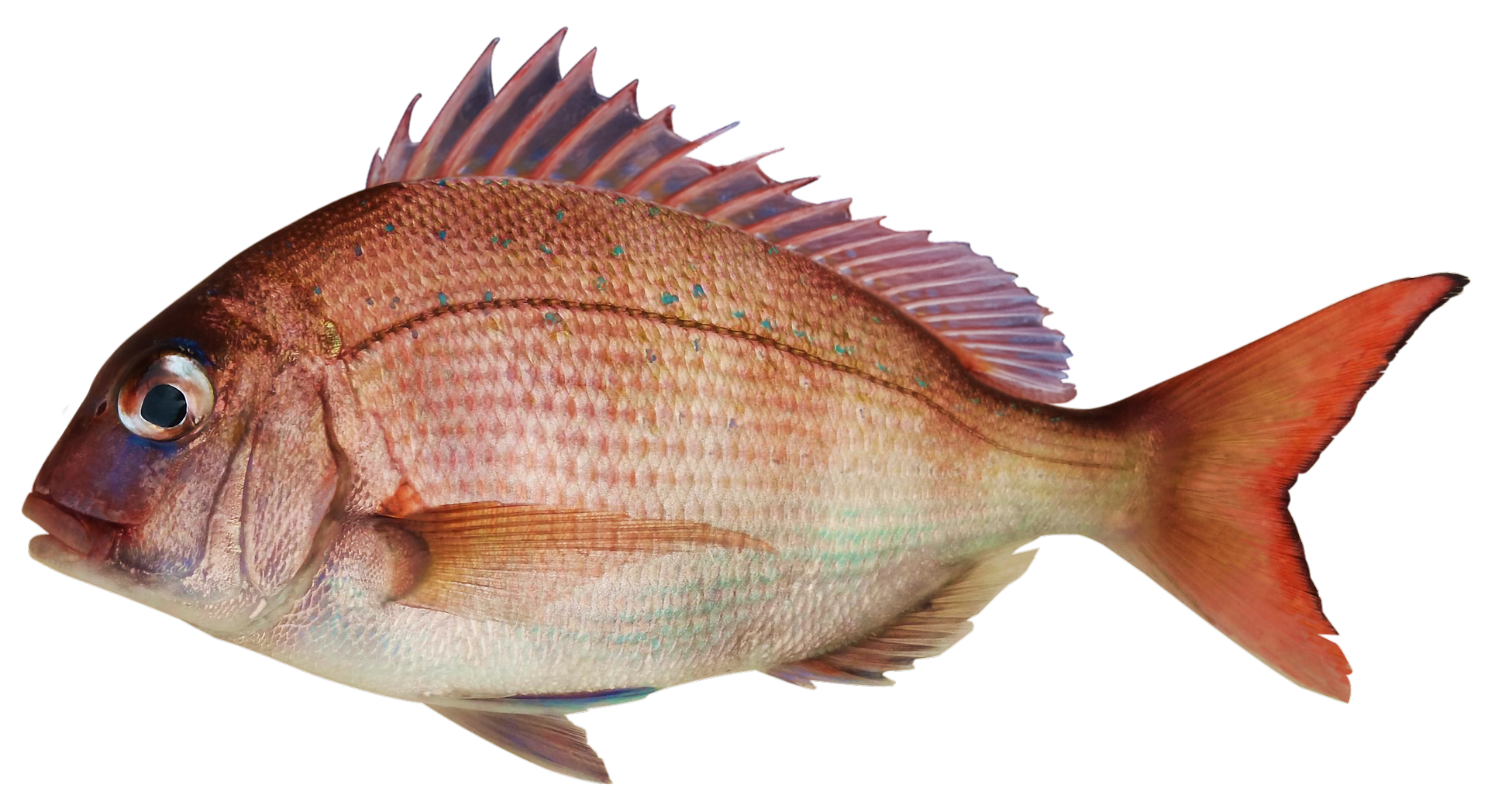
Snapper – Snapper is in fact part of the Bream family and not a ‘True’ Snapper. Snapper is a much sought after species by both commercial and recreational fishers and high fishing pressure in most states have led to stocks being overfished. AVOID.
Squid and Calamari – Gould’s squid and southern calamari squid (both members of the class Cephalopoda) are fished sustainably around Australia. Squid are also imported from New Zealand, Asia and the USA, although the sustainability of these fisheries cannot be guaranteed.
Due to the overfishing of larger fish such as tuna, rays and shark, the natural predators of squid, there has been an increase in squid numbers worldwide and they are expanding into new areas. Squid is a minor fishery in Australia at present, and most of it is caught as bycatch when fishing for other species, like prawns. But as finfish stocks continue to decrease deplete around the world, squid stocks may come under increasing demand as new protein sources are sought.
Trout – AMCS list sea-cage farmed Trout as SAY NO, and Land-based farmed Trout as THINK TWICE. Salmon and trout farmed in land-based pond systems are a preferable alternative to those produced by sea-cage aquaculture. Pollution of local waters, spread of disease and the quantity of wild-caught fish needed to feed farmed trout are all of concern.
Coral Trout: The stock status of fish species grouped under the name ‘coral trout’ is currently defined as ‘uncertain’ in QLD fisheries reports. QLD fisheries managers have reported declining rates of catch of coral trout, which could indicate problems with stocks of some species. As coral trout are a relatively long-lived group of species, uncertainty in stock status combined with declines in catch rates is of concern.
Tuna – Tuna fisherman now routinely use sonar, computer, and gps technology, combined with spotter aircraft, to locate tuna. Then the huge seiners scoop up the entire school of fish, allowing nothing to escape. Most of the top quality catch heads to Japan, and sushi and sashimi restaurants. Pacific Bluefin tuna have been fished to within an inch of their existence. The sleek, bullet shaped fish are now at dangerous 3 or 4% of their peak populations and yet demand for them has never been higher and the fishing fleets pursuing them have never been quite so powerful and relentless. Yellowfin Tuna is on Greenpeace Australia Pacific’s Seafood Redlist. Greenpeace recommends Australian caught Skipjack Tuna as an alternative. AMCS lists Yellowfin Tuna as SAY NO. Forest & Bird (NZ) rank Yellowfin Tuna E (RED – AVOID) in their Best Fish Guide. The IUCN Redlist of Threatened Species lists Yellowfin Tuna as ‘Near Threatened’. Historically overfished. Bycatch from fisheries is a concern. As apex predators, Tunas are important to ecosystems.
Tuna is mostly being overfished – http://www.abc.net.au/foreign/content/2014/s4079574.htm
CANNED – Preferably no tuna is to be consumed at all. However see ‘canned fish’.
Warehou – It is widely agreed that blue warehou has been significantly depleted through fishing. A stock-rebuilding plan is in operation. AVOID.
Whiting – species, including King George Whiting and others, are a much more sustainable option next time you’re ordering fish and chips, but ONLY if it’s Australian. Encourage your fish and chip shop to offer it as a sustainable alternative to flake/shark.
Some handy websites –
Certifying Body: Marine Certifying Council – http://www.msc.org/business-support/global-markets/asia-pacific/australia?set_language=en
Australian Marine Conservation Society – http://www.marineconservation.org.au/
Fish 4 Ever: Ethical canned fish -http://www.fish4ever.co.uk/index.php
Australia’s Sustainable Seafood Guide – http://www.sustainableseafood.org.au/
Good Fish Bad Fish: Seafood + Sustainability. Lots of info including laws on labelling, the role of chefs, farming methods and more – http://goodfishbadfish.com.au/ans
Sustainable table – http://sustainabletable.org.au/Hungryforinfo/FishyBusiness/tabid/143/Default.aspx#6
Shop Ethical – http://guide.ethical.org.au/guide/browse/guide/?type=32
Greenpeace – http://www.greenpeace.org/australia/en/what-we-do/oceans/Take-action/canned-tuna-guide/
What’s The Catch – Matthew Evans’ recent 3 part series.
Episode 1 – http://www.sbs.com.au/programs/whats-the-catch/article/2014/10/07/episode-1-whats-catch
Episode 2 – http://www.sbs.com.au/programs/whats-the-catch/article/2014/10/07/episode-2-whats-catch
Episode 3 – http://www.sbs.com.au/programs/whats-the-catch/article/2014/10/07/episode-3-whats-catch
CopyrightÓjanellapurcell2014[/private]